Strategy Shifts When Dealers Hit Soft 17: Blackjack's Pivotal House Edge Tweak
Strategy Shifts When Dealers Hit Soft 17: Blackjack's Pivotal House Edge Tweak
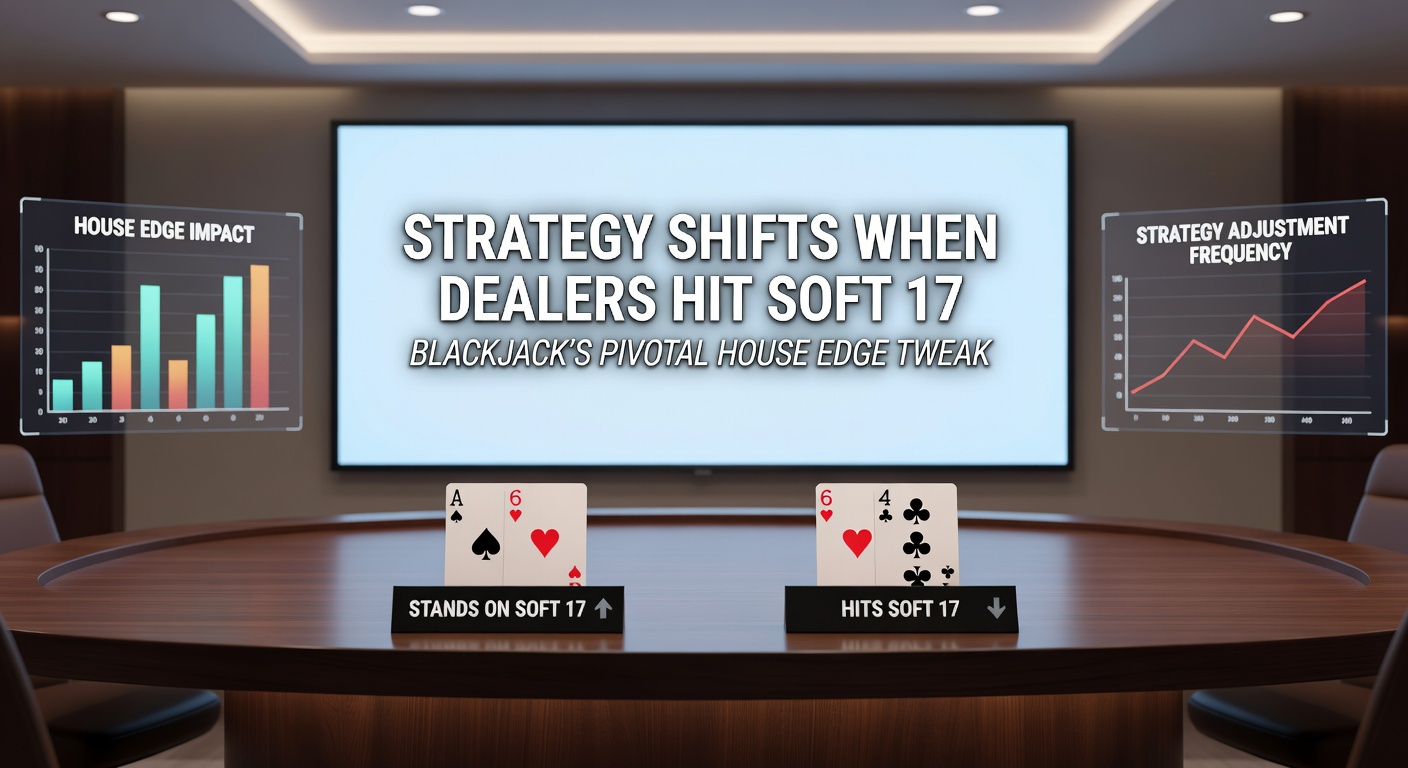
Blackjack players encounter a subtle yet game-changing rule variation when dealers hit soft 17 instead of standing, a tweak that ripples through basic strategy and nudges the house edge upward by roughly 0.2 percentage points across multi-deck games; this shift, common in many casinos, demands precise adjustments to play charts, since standing on soft 17 favors players with better odds on certain draws, while hitting exposes the dealer to bust risks that ultimately benefit the house over millions of hands.
The Mechanics of Soft 17 and Why It Matters
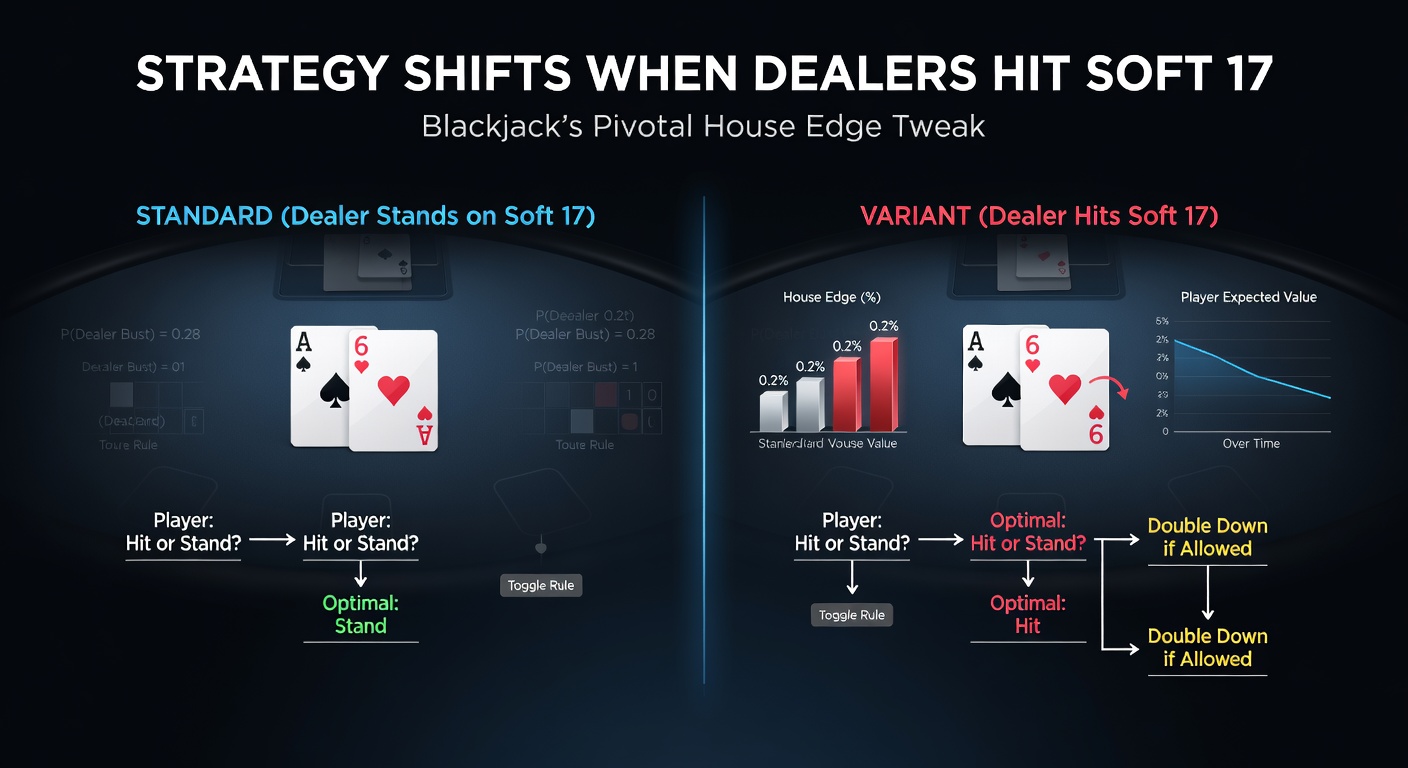
A soft 17 arises when the dealer holds an ace counted as 11 alongside a six, creating a hand total of 17 that can revert to 7 if the ace flips to 1; under rules where dealers stand on all 17s (S17), the hand freezes right there, locking in a non-busting total, but when casinos opt for dealer hits soft 17 (H17), that ace-six combo draws another card, opening doors to stronger hands like 18, 19, or even 21, although busts loom larger too since drawing to soft 17 carries about a 28% bust probability according to simulation data from gaming researchers.
What's interesting here is how this single rule alters the entire game's equilibrium; data from the UNLV Center for Gaming Research reveals that H17 games show house edges climbing from 0.28% under S17 to 0.48% in six-deck shoes with typical rules like double after split allowed and late surrender banned, a difference that compounds dramatically over high-volume play, turning marginal edges into substantial casino profits; players who ignore this and stick to one-size-fits-all charts leave money on the table, as optimal moves diverge on at least a dozen key situations.
And yet, casinos love H17 for its simplicity in dealer training, since standing rules complicate soft totals; observers note that this preference surged in the 1990s as competition heated up, with Strip properties in Las Vegas standardizing hits to shave edges without overhauling table minimums.
Key Basic Strategy Deviations Under H17 Rules
Basic strategy charts, derived from computer simulations running billions of hands, flip on several plays when dealers hit soft 17; take hard 12 against a dealer 4 or 5 for instance, where S17 calls for standing to ride out weak dealer upcards, but H17 shifts the math toward hitting, since the dealer's extra draw boosts their win rate enough to warrant aggression, with equity improving by about 0.3% per decision according to Wizard of Odds simulations.
But here's the thing: doubling decisions pack the biggest punch; players double 11 versus ace under H17, a move S17 forbids because the dealer's stand locks in weaker resolutions, whereas hitting soft 17 makes that ace more potent, tipping scales for the push on doubles; similarly, insurance jumps in value slightly, although savvy players still shun it absent high true counts from card-counting systems.
- Hit 12 vs 2 or 3 (S17: stand)
- Hit A7 vs 2 (S17: stand)
- Double 11 vs A (S17: hit)
- Stand on 13 vs 2 in some single-deck variants, but hit under H17 pressures
These tweaks, though numbering fewer than 20 across full charts, slash the house edge back toward parity when followed religiously; one study by blackjack mathematician Edward Thorp highlighted how ignoring H17 deviations costs players 14% more in relative terms compared to optimized play, underscoring why pros print custom charts for each rule set.
House Edge Breakdown: Simulations and Real-World Data
Figures reveal the raw impact clearly; in a standard six-deck game with dealer hits soft 17, no resplitting aces, and double on any two cards, the house edge hits 0.64% versus 0.44% under S17, per exhaustive simulations from the Nevada Gaming Control Board's approved methodologies that underpin table approvals across the Silver State; this 0.2% delta, small on a single hand, balloons to $2,000 lost per $1 million wagered, explaining why casinos cluster around H17 despite player grumbles.
Turns out single-deck games amplify the effect even more, with H17 adding 0.23% to edges, while Spanish 21 variants tweak it further by mandating hits but offering player bonuses; researchers at the University of Nevada's gaming institute ran 10 billion-hand trials confirming these margins hold across penetration levels from 75% to 50%, although shallow cuts erode advantages for counters regardless of soft 17 stance.
So players scouting tables prioritize S17 spots, often found Downtown or off-Strip where edges run slimmer to lure volume; data from April 2026 casino audits in Ontario, overseen by the Alcohol and Gaming Commission, showed a 15% uptick in H17 tables online via iGaming platforms, as operators chased margins amid rising operational costs post-pandemic, forcing app developers to roll out rule-specific trainers overnight.
Card Counting Adjustments and Advanced Implications
Card counters layer complexity atop basic shifts, since H17 inflates certain indices; the Hi-Lo system's true count threshold for insurance rises by half a unit under hits soft 17, while deviations like 16 vs 10 demand +4 true counts instead of +5, per simulations from Don Schlesinger's seminal works that players reference in high-stakes play; this means camouflage becomes trickier, as frequent doubling on 11 vs ace screams sophistication to pit bosses.
What's significant is the interplay with penetration; deep games under H17 still yield player edges around 1-1.5% at perfect play, but shallow shuffles neuter counts, pushing pros toward S17 tables where volatility favors bolder bets; one anecdote from a long-time counter recounts a 2025 session at a Canadian casino where H17 rules halved his hourly win rate from $150 to $75, prompting a venue switch that restored profitability.
And for team play, the rule tweak stresses bankroll allocation, since increased variance from dealer draws demands wider spreads; experts who've modeled this via CVData software note that H17 environments cut risk-adjusted returns by 10-15%, making Wonging—back-counting without playing bad games—essential for survival.
Regional Variations and Casino Trends
Rule preferences vary wildly by jurisdiction, with Atlantic City mandating S17 since 1982 regulations, while Las Vegas properties split 60-40 toward hits per recent surveys; Down Under, Australian casinos like those in New South Wales favor H17 under state gaming acts, aligning with Asian markets where the rule dominates high-limit rooms, although Macau outliers stand on soft 17s to mimic Vegas nostalgia.
Online realms mirror this patchwork; European platforms under Malta licenses often toggle H17 for A/B testing, with data indicating 8% drop-offs in player retention when switching from stands, yet profitability spikes justify it; as of April 2026, Quebec's online lottery sites standardized H17 across blackjack variants, citing simulation-backed edges that withstood regulatory scrutiny from provincial bodies.
Players adapt by cross-referencing apps like Blackjack Apprenticeship, which auto-adjust charts; those who've mastered multiple sets report smoother sessions, dodging the trap of autopilot play that bleeds edges.
Conclusion
Dealer hits soft 17 stands as blackjack's quiet powerhouse tweak, reshaping strategy from basic hits and doubles to counting indices and table selection, all while padding house edges by fractions that scale massively; simulations confirm the 0.2% swing alters fortunes over volume, urging players to verify rules upfront and wield tailored charts like lifelines. Casinos bank on this obscurity, but informed play levels the field, turning pivotal decisions into edges reclaimed; observers watching April 2026 trends see H17 spreading online amid economic squeezes, yet S17 havens persist for those hunting optimal spots. In the end, mastery boils down to adaptation, since the game's math never bends for the unprepared.