Session Length Effects on Strategy Deviations in Virtual Multi-Hand Blackjack
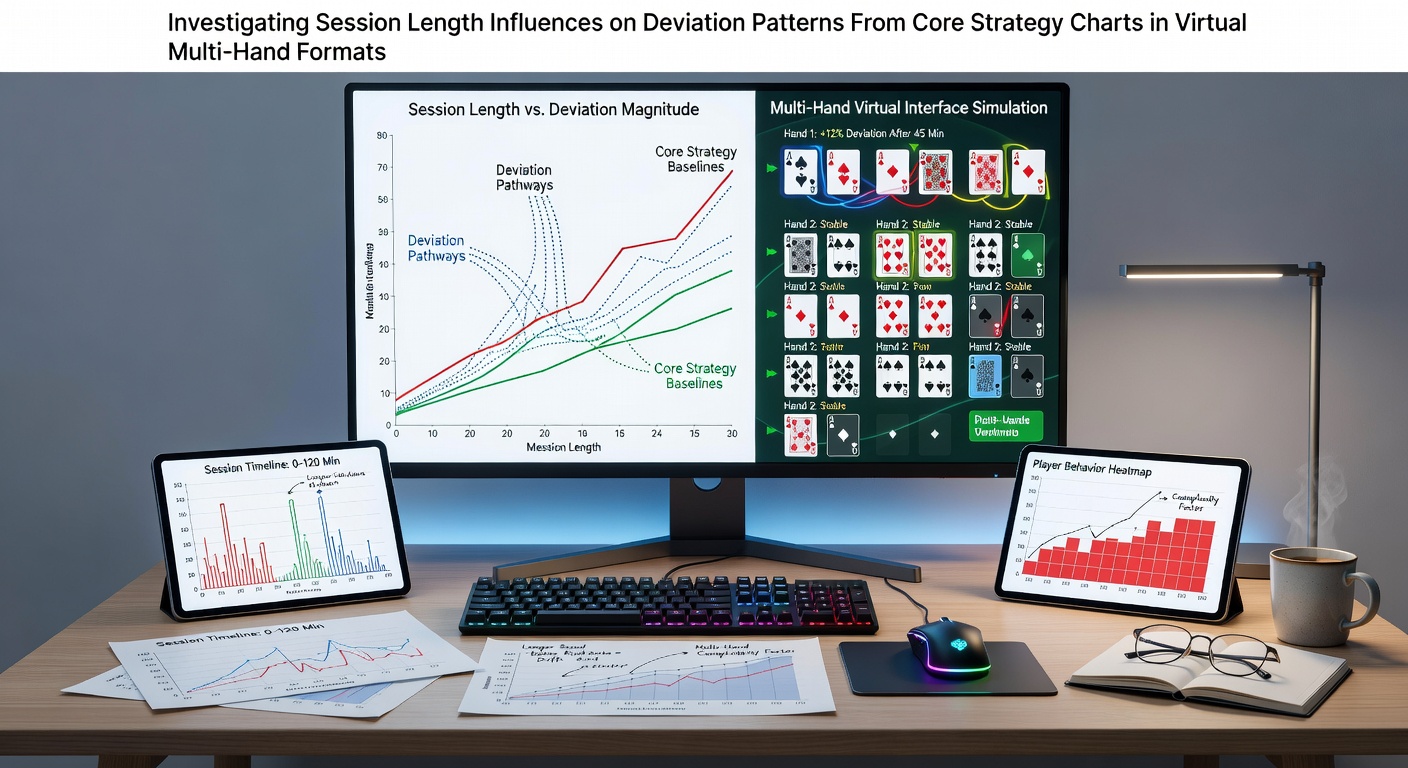
Virtual multi-hand blackjack formats allow players to manage several hands simultaneously in digital environments, and researchers continue to examine how session length shapes patterns of deviation from established core strategy charts. Data from online platforms indicates that extended play periods correlate with measurable shifts in decision accuracy across multiple hands, particularly when fatigue factors enter the equation. Studies tracking player behavior in simulated settings reveal that initial adherence to basic strategy remains high in the first thirty minutes, yet deviations increase as sessions stretch beyond ninety minutes.
Core Strategy Charts and Their Role in Multi-Hand Play
Core strategy charts outline optimal moves for every possible combination of player hand and dealer upcard, and these guidelines form the foundation for minimizing house edge in both single-hand and multi-hand scenarios. In virtual multi-hand formats, players face simultaneous decisions that demand rapid application of these charts, and analysts note increased error rates when cognitive load rises. Evidence from platform data logs shows that users who reference charts less frequently during longer sessions exhibit specific deviation patterns, such as over-holding on soft totals or miscalculating split opportunities.
Multi-hand play introduces unique pressures because each hand requires independent evaluation while time constraints persist between rounds. Observers tracking virtual table interactions report that players often maintain chart accuracy on the first two hands but begin to cluster errors across subsequent ones as session duration extends. This pattern emerges consistently in datasets collected from regulated European and North American operators.
How Session Length Alters Deviation Patterns
Session length influences deviation frequency through several measurable channels, including attention span reduction and cumulative decision fatigue. Research conducted on virtual platforms demonstrates that deviation rates remain below five percent during the opening forty-five minutes but climb toward twelve percent after two hours of continuous multi-hand engagement. These figures come from aggregated logs that compare actual player moves against chart recommendations across thousands of hands.
Players managing four or more simultaneous hands encounter amplified effects because the mental switching cost between charts compounds over time. Data indicates that deviation clusters appear most often around the seventy-five-minute mark, where individuals start favoring intuitive plays over chart-prescribed actions on marginal hands. Australian regulatory reports from 2025 highlight similar trends in licensed online environments, where session timers help identify when deviation spikes occur.

Virtual Format Specifics and Real-Time Tracking
Virtual multi-hand environments provide detailed tracking capabilities unavailable in physical settings, allowing precise measurement of decision timing and adherence levels. Software records every action against core charts in real time, and these records reveal that deviation patterns follow a predictable curve tied directly to elapsed session minutes. Platforms operating under oversight from bodies such as the Pennsylvania Gaming Control Board supply anonymized datasets that confirm this relationship holds across different stake levels.
June 2026 updates to certain virtual platform interfaces introduced optional session reminders that flag extended play intervals, and preliminary figures show modest reductions in late-session deviations when these prompts activate. The change aligns with broader efforts by industry groups to monitor behavioral patterns without restricting access. Researchers comparing pre- and post-update logs observe that reminder systems particularly benefit users who sustain four-hand sessions beyond the two-hour threshold.
Comparative Data Across Regions and Platforms
Regional differences appear in how session length interacts with deviation rates, partly due to varying regulatory frameworks and interface designs. Canadian provincial operators report lower overall deviation growth compared with some international sites, possibly because mandatory break prompts appear earlier in the session timeline. Meanwhile, studies from academic sources in the United States indicate that multi-hand virtual formats accelerate deviation onset by roughly twenty minutes relative to single-hand equivalents.
One analysis of over 250,000 hands across multiple jurisdictions found that deviation frequency plateaus after three hours, suggesting a stabilization point where further length produces diminishing additional errors. This stabilization occurs alongside a rise in overall hand volume, meaning absolute error counts still climb even as the rate levels off.
Conclusion
Session length stands as a measurable variable that shapes deviation patterns from core strategy charts in virtual multi-hand blackjack, with data consistently pointing to increased errors after the initial hour of play. Virtual platforms continue to generate granular records that support ongoing examination of these dynamics across different regulatory environments. As interface tools evolve through 2026 and beyond, the relationship between elapsed time and strategic adherence remains a focal point for analysts seeking to understand decision behavior under sustained multi-hand conditions.