California Cardrooms Adjust to New Dealer Rotation Standards Starting April 2026

California cardrooms began operating under updated regulations for the rotation of the player-dealer position in blackjack-style games on April 1, 2026, and those facilities now face a June 1, 2026 deadline to submit any requests for review or modification of previously approved game rules. The changes focus on maintaining compliance with existing player-dealer rotation requirements across the state, and regulators have indicated that approvals for non-compliant games could start facing withdrawal actions as early as July 2026. Observers note that the timeline creates a structured window for operators to align their practices with the clarified standards.
During May 2026 many cardrooms are expected to conduct internal audits of their current game offerings while preparing the necessary documentation for submission to state authorities. This period allows facilities to evaluate how their blackjack variants handle dealer rotation and to identify any adjustments needed before the June cutoff. Those who have studied similar regulatory updates in other jurisdictions point out that early preparation often reduces the risk of last-minute complications when final filings are due.
Understanding the Rotation Requirements
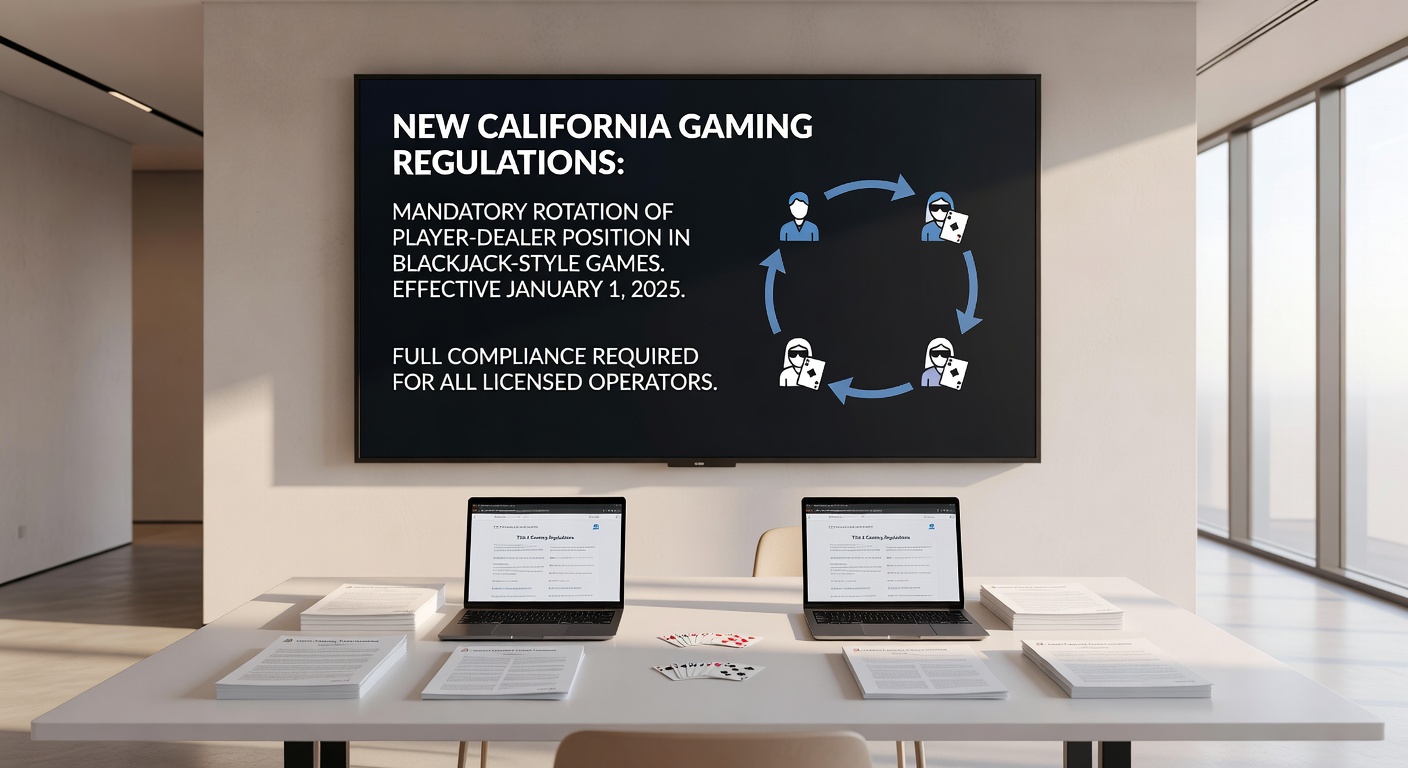
The regulations center on ensuring that the player-dealer position rotates properly in games that resemble blackjack, a practice designed to keep operations consistent with California gaming statutes. Cardrooms that offer these games must demonstrate that their rules support the required rotation sequence, and any deviation can trigger a formal review process. According to the Regulations: Rotation of the Player-Dealer Position & Blackjack-Style Games, facilities receive clear guidance on what constitutes acceptable rotation procedures and how those procedures must appear in approved game rules.
Operators who already hold approvals for specific blackjack-style variants now have until June 1, 2026 to request modifications if their current rules do not fully reflect the rotation standards. Failure to submit a request by that date leaves the existing approval vulnerable to withdrawal starting in July, which means games could be removed from play until corrected documentation receives clearance. Researchers who track gaming compliance trends have observed that staggered deadlines like these tend to encourage systematic rather than rushed responses from affected businesses.
Timeline and Next Steps for Facilities
April 1, 2026 marked the official start of enforcement for the updated rotation rules, yet the state built in a compliance window that extends through June and July. Cardrooms therefore have roughly two months after the effective date to finalize their paperwork, and many are using May 2026 to gather data on how rotation occurs at each table. This approach gives management teams time to consult with legal and compliance staff before sending materials to regulators.
Once a request reaches the appropriate oversight body, reviewers examine whether teh proposed or existing rules align with rotation mandates. If discrepancies appear, the facility receives an opportunity to revise the submission, although the overall July withdrawal risk remains in place for any games left unaddressed. People familiar with state gaming processes note that prompt communication between cardrooms and regulators often leads to smoother resolutions during such transition periods.
Impact on Daily Operations
Dealers and floor supervisors at participating cardrooms are receiving updated training materials that emphasize correct rotation timing and documentation. These sessions focus on practical steps such as tracking player-dealer turns and recording them according to the approved rules, which helps prevent inadvertent violations during live play. Data collected during May 2026 will likely feed into the June submissions, giving operators concrete examples to reference when explaining how their tables meet the standards.
Facilities that complete their filings early may gain additional review time if questions arise, whereas those who wait until the final weeks before June 1 could encounter heavier workloads for both staff and regulators. Observers note that the structure of the deadlines encourages a measured pace rather than a scramble, which can reduce errors in the paperwork that accompanies each request.
Conclusion
The April 2026 implementation of clarified player-dealer rotation rules, combined with the June submission requirement and potential July withdrawal actions, establishes a defined compliance pathway for California cardrooms offering blackjack-style games. As May 2026 progresses, facilities continue to assess their current operations and prepare documentation that demonstrates adherence to the rotation standards. The process ultimately supports consistent application of state requirements across all affected locations while providing operators with a clear schedule for any necessary adjustments.